Data structures with a business purpose.
A Java desktop application that makes FIFO order processing and LIFO transaction undo tangible.
What happens to inventory when an order changes?
An order system needs predictable processing and a way to correct the most recent inventory change. These business rules are a concrete use case for queues and stacks.
Build a small desktop warehouse dashboard that connects pending sales orders, inventory changes, and transaction history through explicit data structures.
Separate records from behavior
Used an ERPRecord interface with SalesOrder and InventoryTransaction classes. ERPService manages the inventory, order queue, undo stack, and activity log independently of the Swing interface.
Process and reverse
Implemented a generic linked FIFO queue for pending orders and a generic linked LIFO stack for processed transactions. Processing reduces inventory; undo restores the last transaction’s inventory change.
Make the state visible
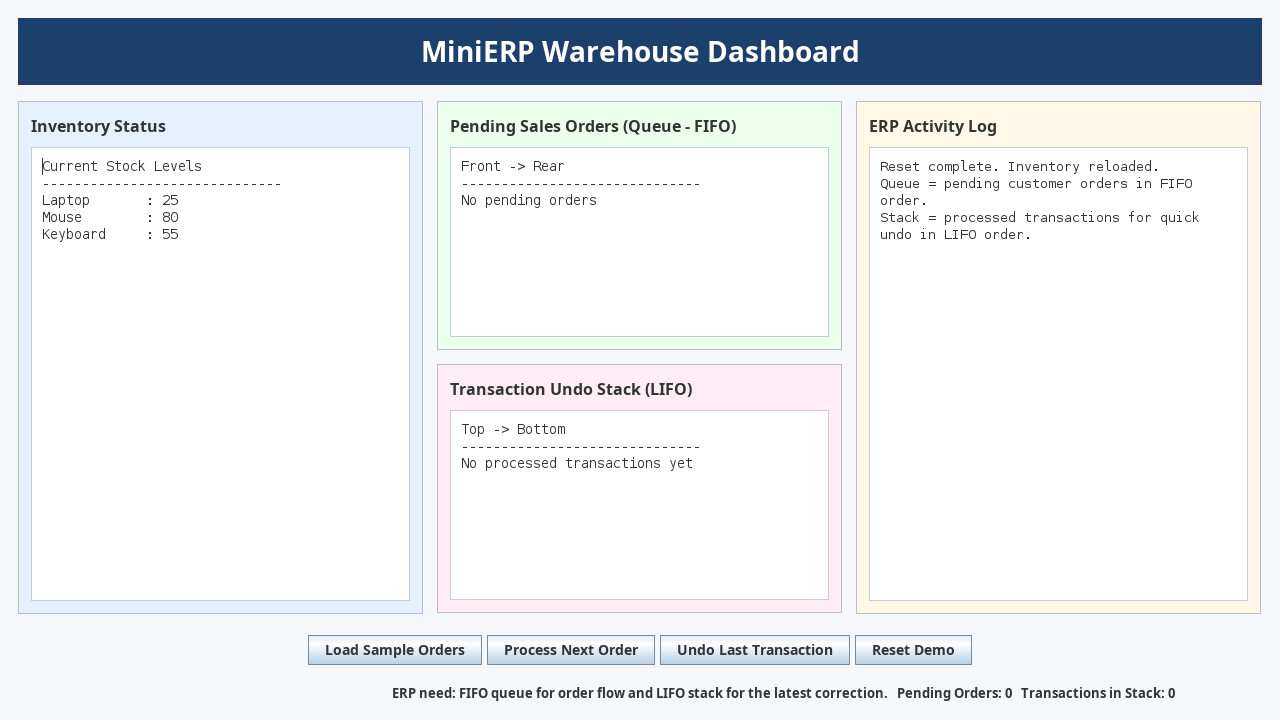
Built a Swing dashboard showing inventory, queue, stack, and a running activity log, with controls to load sample orders, process the next order, undo, and reset.
First in. First out.
Last change. First undone.
An interactive explanation using the Java project’s sample orders. Processing updates inventory; undo restores stock without re-queuing the order.
No processed transactions.
Inside the original application.
What the work delivers.
Runnable Java source and a documented desktop workflow. The original project screenshots below show the application’s actual state transitions.
Separating the service layer from the interface makes the business rules easier to follow. Undoing a stock change and re-queuing an order are distinct operations; this application implements the former.
Project scopeAn in-memory coursework application with sample data. It has no persistence, multi-user access control, or production warehouse integration. The web interaction is an explanatory companion to the Java application.